
What to Do in Istanbul in 3 Days: Complete Itinerary
Istanbul is one of the most fascinating cities in the world, but you’ll want to plan your itinerary well because the city is huge. Without a plan, you might miss out on some truly amazing places.
I’ve visited Istanbul three times in different seasons, so I had the chance to see not only the main attractions but also several more local, lesser-known areas.
To help you out, I pulled together my best tips and created this 3-day Istanbul itinerary I always recommend when people ask me for advice. It’s perfect for a first trip to the city.
If you’re staying more days, don’t worry — I’ve added extra suggestions at the end.
Important Tip: To make your trip easier, I recommend buying the Istanbul ePass, which gives you access to the city’s main attractions (except Hagia Sophia). The biggest advantage of this pass is that you can skip the lines — a must in Istanbul!
Istanbul itinerary overview
I planned this route so the sights make logistical sense, and you can see the maximum amount of things walking. That’s my favorite way to explore — especially in a city like Istanbul, full of intriguing corners.
If you’d rather not walk that much or you’re traveling with kids, no problem. You can also use Istanbul’s public transport between stops. The city is very well connected and getting around is easy — read my guide to Public Transport in Istanbul.
Here’s what you’ll cover on this 3-day Istanbul itinerary:
- Day 1: Explore Istanbul’s headline sights like the Blue Mosque, Hagia Sophia, and the Grand Bazaar. It’s the most intense day, but it’s absolutely worth it.
- Day 2: Discover the Galata and Taksim area, ending with Istanbul’s most beautiful sunset.
- Day 3: Cross to Istanbul’s Asian side for a completely different vibe — one of my favorite things to do.
Map of the 3-day Istanbul itinerary
To make things easier, I pinned all the attractions and restaurants mentioned in this guide on the map below. You can save it to your Google Maps app for offline access during your trip.
Important: You’ll need to pick which sights to go inside
With only 3 days in Istanbul, you’ll need to choose which attractions you want to buy tickets for and visit.
Three days is enough time to stroll the city and see the top sights from the outside, but not enough to enter every museum and mosque. Some museums are massive and can take hours. It’s also common to find long lines at the most popular attractions.
In other words, you’ll have to prioritize what you really want to visit.
That said, I’ll point out throughout this itinerary which places I think are most worth taking time for a complete visit.

Day 1 in Istanbul: The historic center
Before we dive into the details, a heads-up that this first day of the Istanbul itinerary is the most intense.
I set it up this way because many of the city’s main sights are just minutes apart, so it’s worth covering them all in one go.
Walk across Galata Bridge

If you’re staying in Karaköy (my favorite area to stay in Istanbul), you’ll start the day by heading over to Sultanahmet.
There are multiple ways to get there, but I recommend taking the T1 tram, which crosses the Galata Bridge. Tourists love it for the views along the way, and it drops you right in the heart of Sultanahmet.
Read next: Where to Stay in Istanbul
Topkapi Palace


Just a short walk from the tram stop, you’ll find the entrance to Topkapi Palace, built by Mehmed II in 1453 after the conquest of Constantinople as the residence of the Ottoman sultans.
Today, it’s a vast museum where you can see palace architecture and several artifacts and relics sacred to Muslims, such as strands of the Prophet’s beard and his footprint.
The complex is large, so expect to spend 2–3 hours if visiting inside. Since this Istambul itinerary is only 3 days, I don’t recommend going inside Topkapi on this trip. If you still do want to see the exhibitions, buy skip-the-line tickets in advance to avoid queues — get your ticket here.
Even if you skip the visit, it’s worth walking up to admire the palace’s exterior. Right next to the palace, stroll through Gülhane Park (shown above) — it’s lovely, especially in spring and summer. Entry is free.
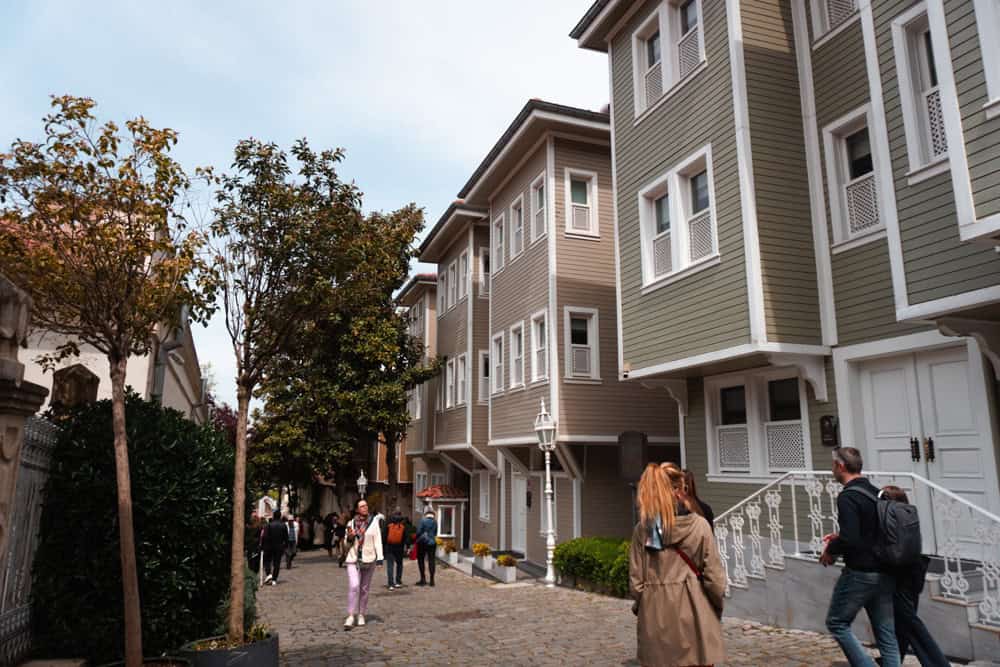
Continue along Soğuk Çeşme Sk. toward the Blue Mosque. This street is special for its historic mansions (now hotels) — see below:
Hagia Sophia
Hagia Sophia is one of Istanbul’s most iconic and important landmarks. The mosque we see today is the third religious building erected on this same spot.
Built in 537 by the Byzantine Emperor Justinian I, it initially served as the Cathedral of Constantinople. Over the centuries, it changed roles several times until 1453, when it became a mosque and gained its minarets.
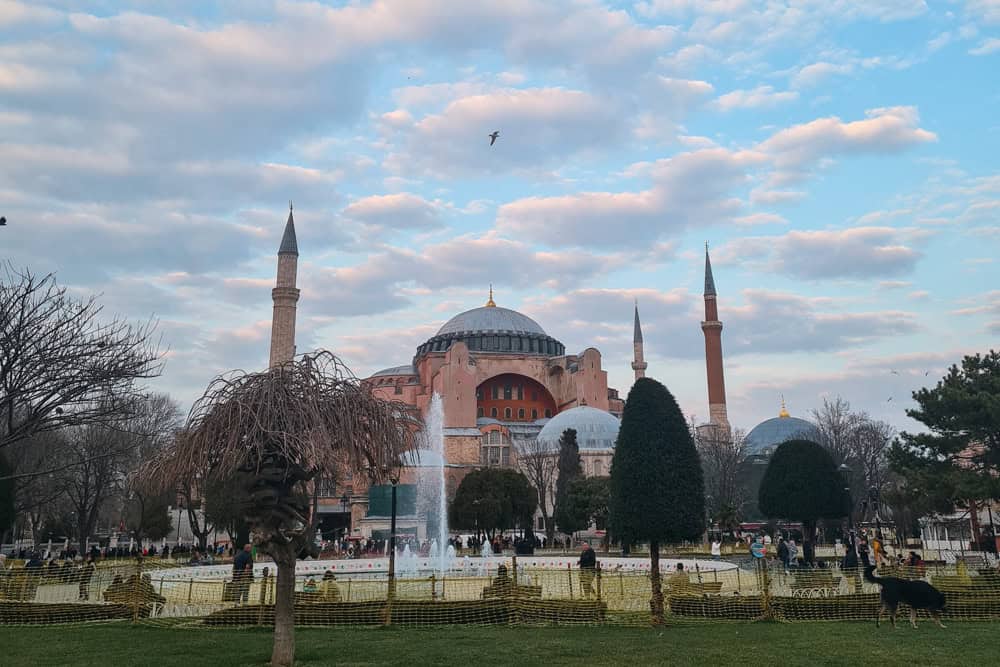
What impresses most is the scale of the building. Since it was built, it has ranked among the world’s largest religious structures and inspired countless others.
The building is grand and imposing, but nothing compares to the interior — one of my must-see experiences in Istanbul.
Lines are usually long, so buying tickets online is worth it — purchase here. If you don’t buy online, you’ll face an extra line at the ticket office.
Pro tip: I planned Hagia Sophia for early morning on purpose — lines grow throughout the day. Timing matters because the mosque closes to visitors during prayer times. On Fridays, for example, there’s a midday prayer and the mosque stays closed for a few hours during the middle of the day.
Blue Mosque
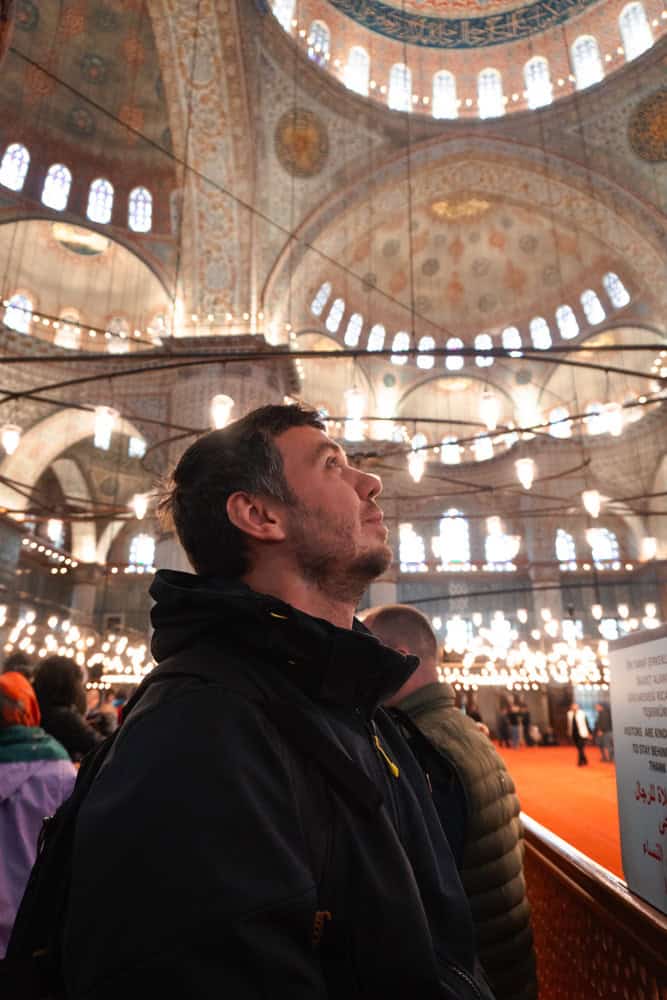

The Blue Mosque faces Hagia Sophia, with the Mosque Square between them. Its official name is the Sultanahmet Mosque, but it’s known as the Blue Mosque for its predominantly blue interior tiles.
Built in the 17th century, it’s in excellent condition to this day and is a UNESCO World Heritage Site.
The Blue Mosque is open to visitors during the day, except during prayer times. The line is much shorter than Hagia Sophia’s and moves quickly. We visited on a Friday after prayers — the line went around the block, but we waited only about 15 minutes.
Entrance is free, but you can book a guided tour if you want more context. Book the tour here.
Tip: If you have to pick just one mosque to enter, I’d choose Hagia Sophia because it’s more striking. But if you go early, you’ll likely have time to see both.
Hippodrome of Constantinople (Sultanahmet Meydanı)
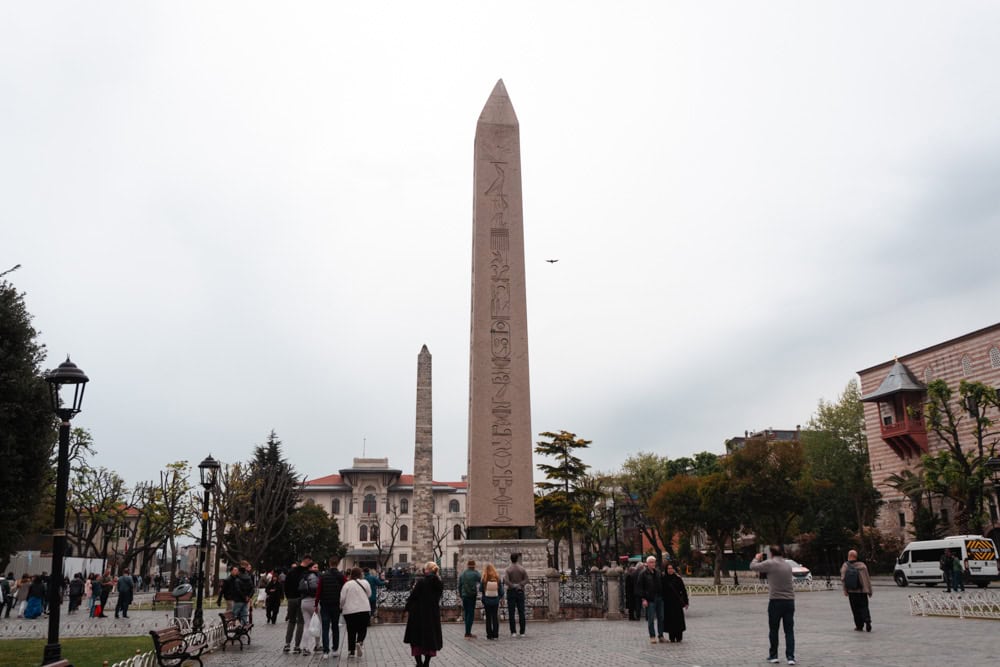
Right next to the Blue Mosque is a broad square known as Sultanahmet Meydanı.
This square once hosted the Hippodrome of Constantinople, the sporting and social hub of the Byzantine capital. It’s hard to picture now, but horse and chariot races were hugely popular — this was Istanbul’s main hippodrome.
Look out for three monuments here:
- Obelisk of Theodosius: An Egyptian obelisk erected here in the 4th century (photo above).
- Serpent Column: Easy to overlook because it’s smaller, this ancient column was brought here by Byzantine emperors to embellish the capital.
- German Fountain (Kaiser Wilhelm Fountain): Built in 1900 by the German government to mark Emperor Wilhelm II’s visit, symbolizing friendship between the two nations.
Basilica Cistern


This is one of my favorite places in Istanbul. A few minutes from the Hippodrome and Hagia Sophia, it’s perfect to visit right after those stops.
As the name suggests, it’s a cistern — an underground water reservoir that supplied the city. But this isn’t just any cistern.
There used to be many cisterns in Istanbul, but this is the largest and most important, supplying this noble district including the Great Palace of Constantinople.
Because it’s underground, the exterior isn’t impressive — you really have to go inside to appreciate it.
I highly recommend visiting, but buy skip-the-line tickets online to save time. The visit usually takes about 1.5 hours. Read my full guide to the Basilica Cistern.
Lunch
Since this first day covers Istanbul’s most touristy zone, finding good food at great prices can be tricky. There are lots of places that are total tourist traps around this area.
Here are a few spots I tried and liked:
- Old Ottoman Cafe & Restaurant: Excellent food and generous portions. Prices are high because it’s touristy, but it’s on a side street, so it wasn’t too crowded or loud. The staff was also super friendly.
- Lokanta 1741: A sophisticated, very popular restaurant in Istanbul. For a special meal, this is a great pick. It’s in the same building as the historic Cağaloğlu Hamam (highly recommended if you’re curious about a traditional turkish bath).
- Kumkapı neighborhood: Just beyond the Hippodrome, this area has narrow lanes with small cafés and restaurants — simple but tasty. I don’t have a specific spot to name because the one we visited has since closed, but it’s a cheaper, less touristy area.
Grand Bazaar

After lunch, it’s time to visit another Istanbul icon: the Grand Bazaar.
The name Grand Bazaar says it all — it’s enormous. If you came to shop, clear your afternoon.
One thing most people don’t realize is that there are many entrances and exits to access the Grand Bazaar. I usually enter through this one (it has a “Grand Bazaar” sign — see below), so it’s nice for pictures as well. It leads you onto one of the main corridors, but there are countless smaller alleys to wander.

You’ll notice shops don’t display prices. Everything is negotiable. If you sample anything, vendors will offer generous tastings and get very creative to close a sale.
Even if you’re not shopping, the bazaar’s structure is fascinating. An Istanbul itinerary would not be complete without a visit.
Pro tip: Prices here skew high compared to elsewhere. The upside is the convenience of having everything in one place — just remember to negotiate. If you want to save money, shop in more local stores. I, for instance, bought spices at a regular supermarket.
Egyptian Bazaar (Spice Bazaar)
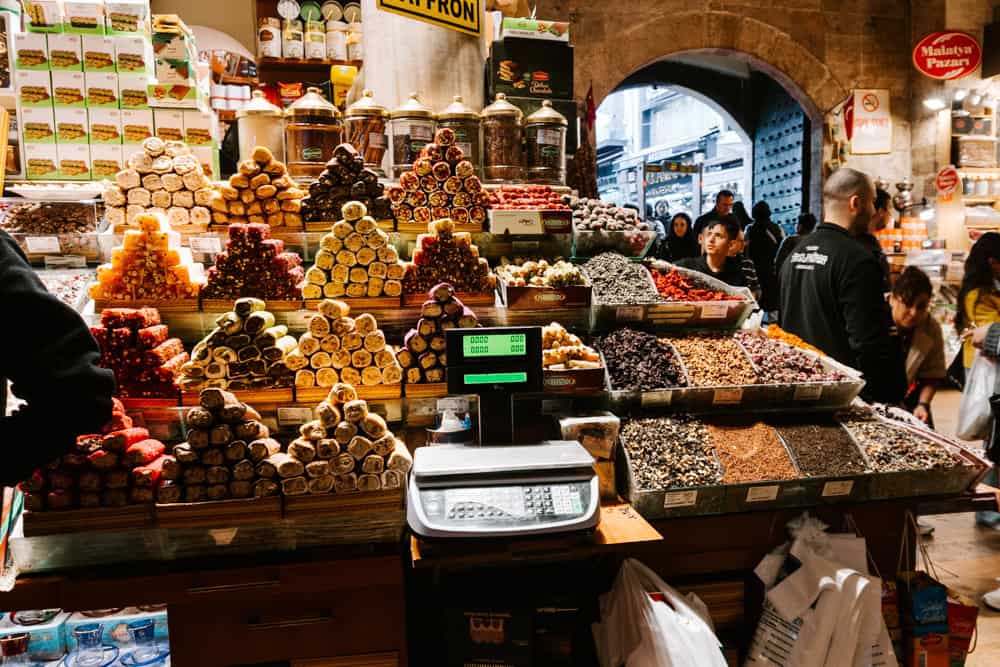
Near the Grand Bazaar is the Egyptian Bazaar, also called the Spice Bazaar. It’s smaller, but we liked it better — it’s calmer and feels a bit more curated.
As the name suggests, spices are the focus. We bought wonderful saffron and Turkish blends to take home — and yes, always negotiate! One thing I do appreciate is that they’ll vacuum everything to make it easy to transport on the flight back home.
Optional: Balat Neighborhood
This is an optional stop on this 3-day Istanbul itinerary — it depends on how long you’ll spend at earlier sights and how much energy you’ll have left.
Balat is famous for its traditional, colorful houses. It’s charming and great for photos. Since it’s a bit farther away, consider taking transport to save your legs.
Sunset on a rooftop

If I could share one tip to make your stay in Istanbul even better, it would be: don’t miss a sunset.
The city is known for spectacular sunsets. On this first day, I recommend heading to a rooftop to watch the lights turn on.
Many hotels and buildings have rooftop bars and restaurants. You can choose one around Eminönü (the bazaar area) or cross to Karaköy for the view from there.
I personally prefer the Karaköy view — you can see Galata Bridge and the skyline of mosques (as in the photo above).
SafetyWing Travel Insurance

We know that insurance is one of those things that we think we don’t need… until we actually do! Dealing with hospital visits and health issues is stressful when you’re traveling, so getting a good travel insurance is the only thing that will give you peace of mind. We recommend SafetyWing, they have very flexible insurance plans covering almost every destination in the world! Take a look at their options and prices below.
Day 2 in Istanbul: The coolest area & an unmissable cruise
Taksim Square
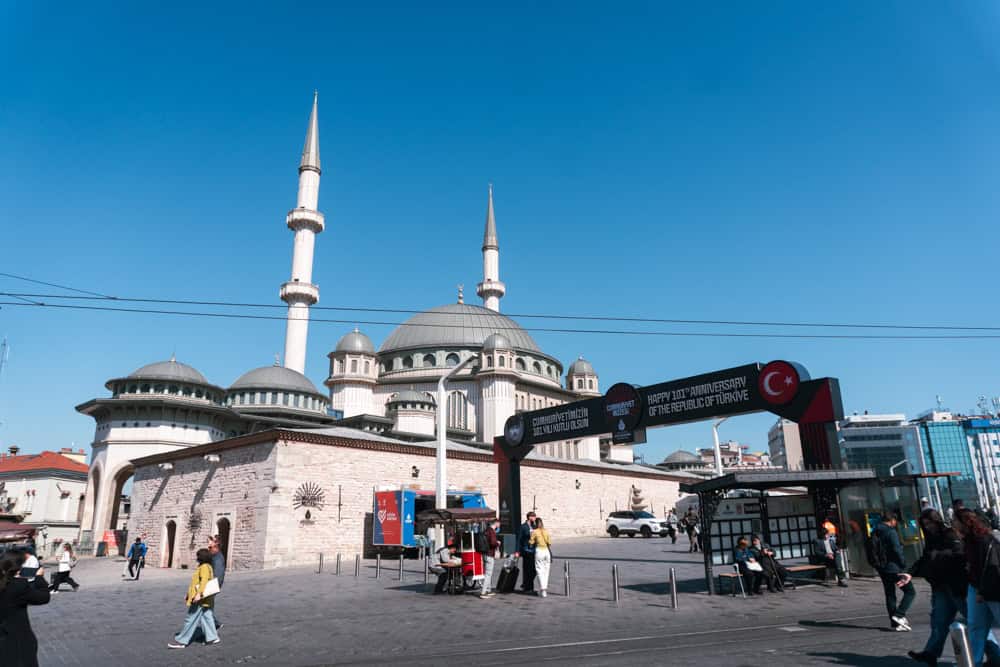
Start Day 2 of this Istanbul itinerary by heading to Taksim Square.
I put this place as the first stop of the day because Taksim sits on top of a hill. If you ride up via public transport, you can then walk the route downhill. Doing it in reverse is doable, but would be far more tiring.
Taksim is the heart of modern Istanbul: the main square and central metro hub. Many cultural events — and protests — take place here.
The square’s most important landmark is the Republic Monument, erected to commemorate the fifth anniversary of the Turkish Republic.
Optional: Historic Tram

Istanbul has two heritage tram lines that run classic trams, and one of them is right here: the T2 line.
The starting point is at the corner of Taksim Square if you want to ride it.
I list this as an optional activity because I prefer to walk the same avenue the tram runs along rather than riding the crowded car. It’s very small and usually gets packed.
Still, it’s a charming piece of Istanbul’s history and worth a look.
Istiklal Avenue: Shopping Street

Walk downhill toward Galata Tower via Istiklal Avenue. It’s the same route the tram takes, so you’ll likely spot it even if it’s not at the terminus.
This is a pedestrian street packed with shops, restaurants, and souvenirs — everything you can imagine. Wide and pleasant for strolling.
Pro tip: Detour into Çiçek Pasajı to see a beautiful historic arcade. It’s lined with restaurants now, but if you go in the morning, you might have it almost to yourself.
Galata Tower
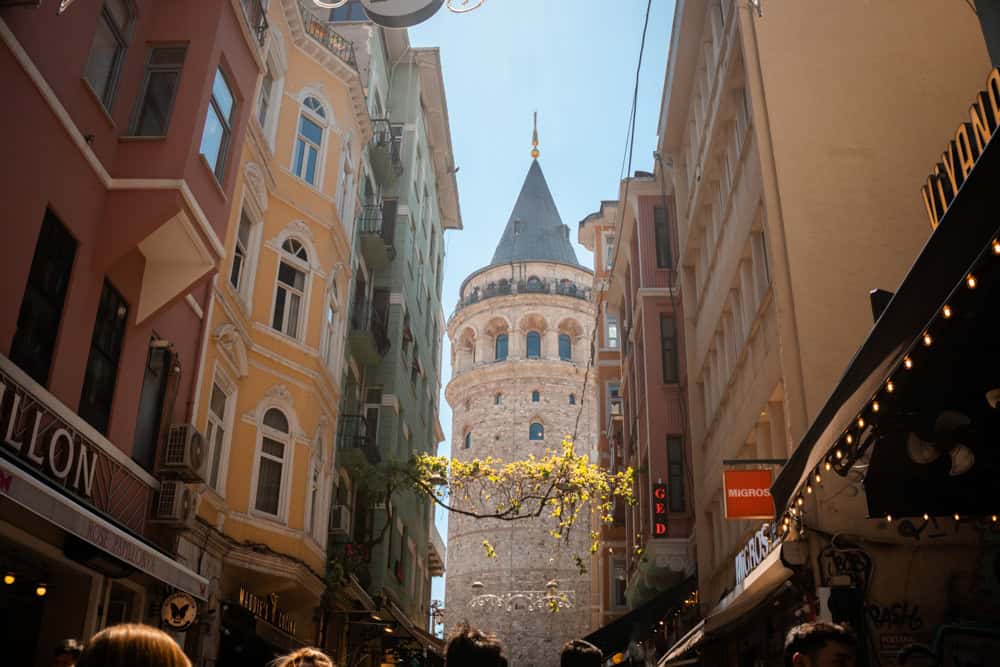
Time for another major landmark: Galata Tower.
Built in 1348, this medieval tower was the tallest structure in Istanbul at the time.
Today you can go inside — there’s even a café and restaurant at the top with sweeping city views.
I think it’s a really cool attraction to visit, but I’ll admit I haven’t gone up yet because of the lines, which are always very long. If you want to go, buy your ticket here.
Pro tip: Büyük Hendek Street has the best view of the tower, but it’s always busy, so you have to be patient for the right picture. It’s where I took the photo above.
Try a San Sebastian Cheesecake
One of Istanbul’s most ubiquitous desserts is actually Basque: San Sebastian cheesecake.
You’ll see it everywhere. As a fan of local treats, of course, I had to try it, and it’s delicious.
The most famous slice is at Viyana Kahvesi Galata by the tower, though the first place to bring the recipe to Istanbul was B. BLOK (which is a bit farther away).
For lunch around Galata, we enjoyed Galata Art Smyrna Restaurant Cafe — quirky and good value.
Optional: Galata Bridge & Fish Market

I’ve kept the afternoon loose on purpose because the star of this second day of the Istanbul itinerary is a Bosphorus cruise.
Since cruises usually start about an hour before sunset, you’ll need to be at the pier around 3–4 p.m. if you are visiting during winter. In summer, sunset is later, so you’ll have more afternoon time.
If you have time, I recommend walking across the Galata Bridge. It has two levels: the road deck above — often lined with fishermen — and a lower level at water height with restaurants.
It’s a fun stroll. Most bridge restaurants serve seafood, but many are overpriced and basic — more on the touristy side.
After crossing both ways, head to the local fish market — see location. I love visiting local markets, and this one has something special.
Besides the fish shops, they also serve prepared dishes. You’ll notice locals queue for a fish dürüm sandwich — it’s the go-to dish here.
If you’d rather sit in a restaurant, walk to Makaracılar Cd, a little further down. This street is lined with bars near the riverbank, with a nice vibe and more upscale settings than the market itself (even though it’s still quite simple). On all restaurants here, the classic is the fish sandwich (balık dürüm).
Bosphorus Sunset Cruise
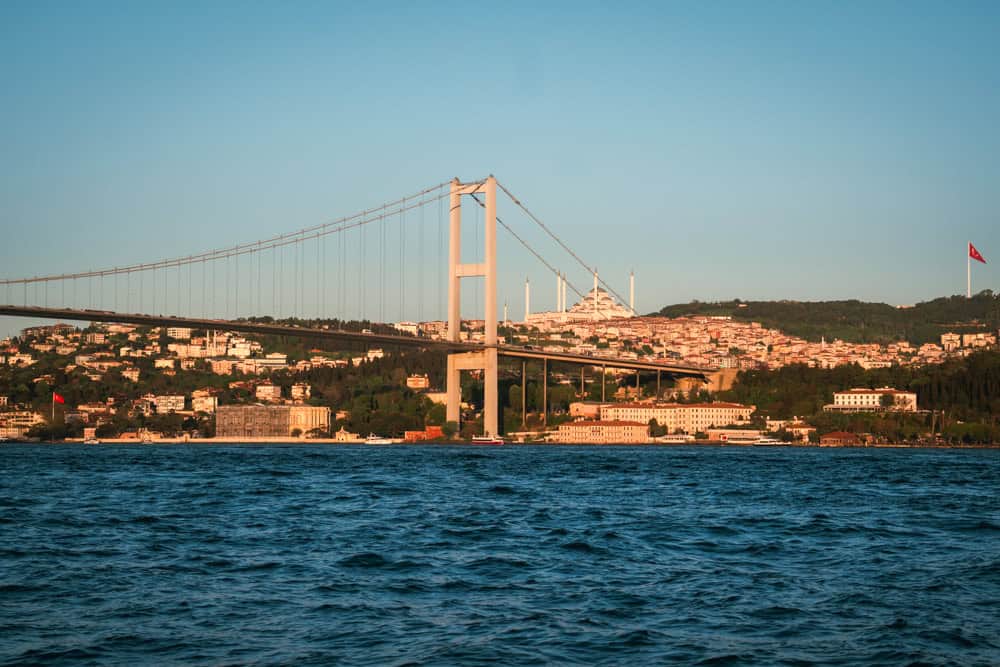
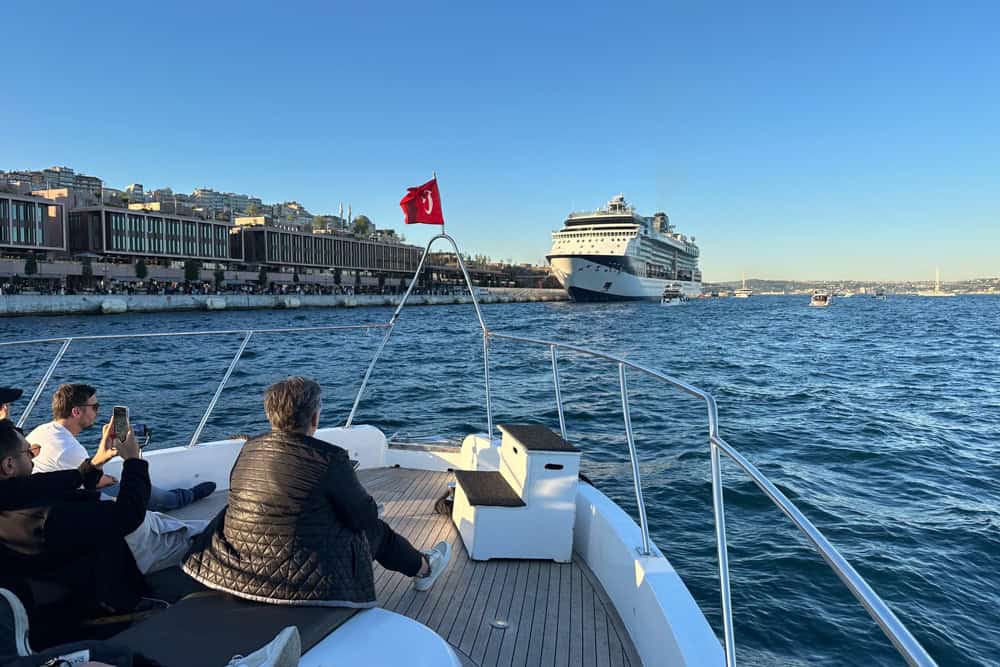
If you only book one tour in Istanbul, make it this one.
A sunset cruise on the Bosphorus is unforgettable. Seeing the city glow from the water is magical.
There are countless options. We chose this small-group yacht cruise, but there are countless options available.
We picked it because it’s on a yacht (not a big boat) with a small group, so everyone had space to enjoy the views, which was great as we were traveling with my mother-in-law.
We loved it. The team was professional; they had three boats and split the crowd into smaller groups. They served Turkish tea and coffee (perfect since the evenings get quite chilly) plus a snack plate with sweets, savories, and fruits.
The cruise lasted about three hours and was fantastic. Highly recommended.
Book your cruise here:
Day 3 in Istanbul: A taste of the Asian Side
To make the most of your final day, I suggest spending it on Istanbul’s Asian side.
Many 3-day Istanbul itineraries skip the Asian side altogether, but the city stretching across two continents is exactly what makes Istanbul so special, so I think something worth seeing.
Ferry to Kadıköy in the morning

Start by taking the ferry across from the European side.
The two most interesting areas on the Asian side to explore are Kadıköy and Üsküdar. With limited time, I suggest focusing on Kadıköy only — doing both would take a full day. If you have extra time, visit Üsküdar as well.
There are several ferry routes across the Bosphorus. Use Google Maps to find the pier closest to your accommodation.
Go early and enjoy a traditional Turkish breakfast once you’re in Kadıköy.
Spend the Day in Kadıköy

Kadıköy is one of my favorite districts because the vibe is totally different — more alternative (especially around Moda, near the ferry stop) and much more residential than the European side.
Places to explore:
- Kadıköy Market
- Street art and murals
- Moda heritage tram
- Cafés and restaurants
I put together a full guide to the Asian Side of Istanbul.
Ferry Back to Kabataş

After exploring, take the ferry back to the European side — this time to Kabataş.
It’s a quieter route and puts you very close to the next sights on this Istanbul itinerary.
Many people make the mistake of returning to Karaköy and then walking to Beşiktaş — not worth it. There’s not much to see along that stretch, so heading straight to Kabataş saves effort.
Dolmabahçe Palace & Mosque
The Kabataş pier sits between two landmarks: Dolmabahçe Palace and Dolmabahçe Mosque.
The mosque wasn’t open for visits on our last trip (check current conditions when you go), but you can admire it from outside — it sits right on the Bosphorus.
Dolmabahçe Palace is one of Istanbul’s largest palaces — you’ll have seen it from the water on Day 2. Built in the 19th century, it was the city’s first palace in European style.
Among other things, it’s known as the place where the young republic’s first president spent his final days. You’ll see Atatürk’s name across the city on buildings and stations.
Today it’s a museum — buy tickets here. Skip-the-line is worth it, so you don’t lose precious time.
Optional: Walk to Büyük Mecidiye Mosque

To end your trip on a high note, walk to the Büyük Mecidiye Mosque, set in front of one of the big Bosphorus bridges.
It’s gorgeous at sunset.
You’ve probably seen this spot in Istanbul photos — it’s where many people do those dramatic rooftop shoots with flowing gowns.
Even if you don’t want to do the photoshoot (like us), it’s one of the best places to watch the sunset in Istanbul.
Book Guided Tours in Istanbul
Have more than 3 days in Istanbul?
Having more than three days is not a problem — it’s a big opportunity.
I designed this as a 3-day plan because that’s the average trip length, but Turkey’s largest city offers so much that you won’t run out of things to do with extra time.
Ideas for Istanbul if you have longer:
- See a whirling dervish’s performance
- Join a food tour with a local — absolutely worth it to discover Turkish cuisine.
- Try a Turkish bath (hamam) — a classic experience.
- Visit other mosques I didn’t include here — there are hundreds across the city, each impressive in its own way.
- Head to Üsküdar on the Asian side and go up the Çamlıca Tower.


The eSim we recommend!
Don’t have time to read the entire guide? No problem, this is the international eSIM card we always recommend here at Mauka. It’s the one we always use when we travel and the only one that’s never let us down.
Practical tips for the perfect Istanbul itinerary
- To visit mosques, you’ll need to cover your hair and shoulders and wear long clothing. Women should bring a scarf, but if you forget it, the mosques usually have some to loan.
- Never skip a sunset in Istanbul. You’ll notice I suggest a different sunset plan each day — intentionally, because it’s the best hour to enjoy the views.
- No need to book a hotel with breakfast — it’s worth going out for a traditional Turkish breakfast at local restaurants. Trust me, it’s a must-try. We sampled a different place each day and loved it. Our favorite was Casius Antioch Kitchen Restaurant. After a spread like that, you might even skip lunch.

- Turkey’s currency is the Turkish lira. I’m not listing prices here because the lira has been very volatile, and amounts change quickly. The easiest way to handle money is a multi-currency card such as Wise or Revolut.
- We used public transport and Uber to get around, and also walked a lot. I recommend getting the Istanbulkart for using buses and ferries — read my guide to Public Transport in Istanbul.
- It’s worth buying online tickets for Istanbul’s top sights so you don’t waste time in lines. That’s why I recommend the Istanbul ePass — especially if you plan to visit several attractions.
- Istanbul is big and hilly, so plan your itinerary smartly to avoid getting exhausted. Same when choosing accommodation — check whether it sits atop a hill.
I adore Istanbul. I hope this 3-day travel plan helps you make the most of it, and that you fall for the city as much as I have.
Keep reading about Istanbul
- Istanbul International Airport
- Where to Stay in Istanbul
- How Many Days in Istanbul
- Best Time to Visit Istanbul
- Public Transport in Istanbul
Organizing your trip
To help you plan your trip to Turkey, we have put together our favorite planning resources:
- Flights: Get affordable flights to Turkey on Skyscanner.com.
- Travel insurance: Make sure you are protected during your trip. We use SafetyWing whenever we are traveling abroad.
- Renting a car: We always use Discover Cars to get the best car deals.
- Accommodation: Find the best hotels and apartments on Booking.com.
- Activities: Get fun ideas of what to do and buy unique activities with Get Your Guide.
- SIM Card: Stay connected during your trip with Airalo.
Disclosure: This post may contain affiliate links. This means that we get a small commission from any purchase you make, at no additional cost to you!
